These four bungalow courts officially complete my survey of the 30 Pasadena bungalow courts on the National Register of Historic Places. They’re great examples of how architects and developers played around with the bungalow court form, given the constraints of the lots that they were working with.
Built in 1923, this handsome brick and terracotta building witnessed 60 years of ritual and fraternity as the Highland Park Masonic Temple. Since 2017, it's housed the music venue the Lodge Room and an adjoining restaurant, Checker Hall. All the original Masonic symbols are still intact, and EVERYWHERE.
Villa Carlotta is a fine example of architect Myron Hunt's residential work, and one of Altadena's first homes designed for electricity from the get-go. It was built for Francis R. Welles, who oversaw European operations for Alexander Graham Bell's telephone company for over 30 years.
The bungalow court blossomed in Pasadena between 1910 & 1930. For part four of my tour of all 30 Pasadena courts on the National Register of Historic Places, we're focusing on six that are known only by their addresses. I call them: THE NAMELESS.
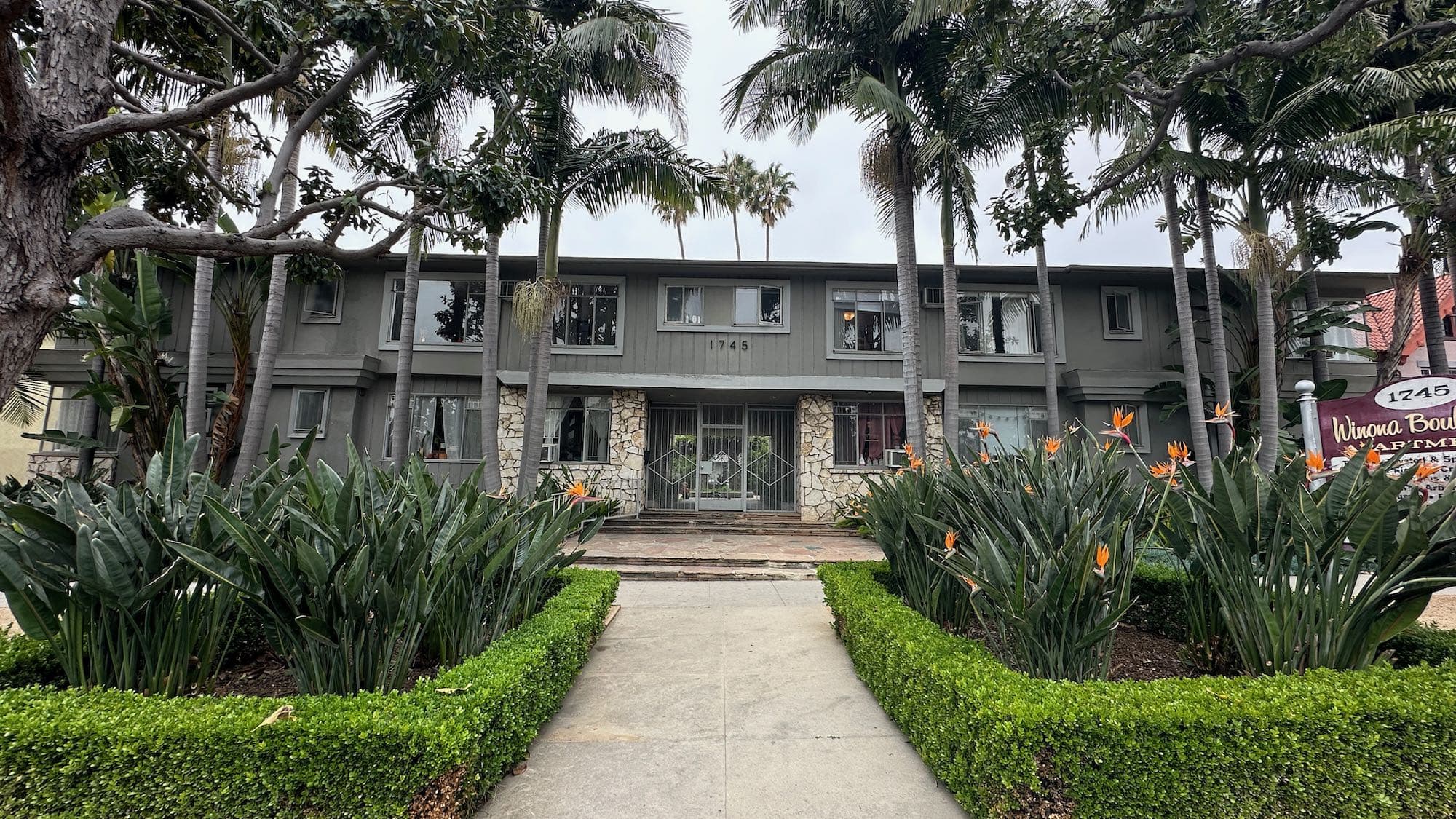
The Winona Boulevard Mid-Century Modern Historic District includes 13 apartment complexes in a grab bag of MCM styles, built from 1950-1964. Collectively they offer a snapshot of a neighborhood in transition during the post-WWII population boom.
The bungalow court flourished between 1910-1930, especially in Pasadena. For this third batch in our exploration of all 30 Pasadena courts on the National Register, we’re looking at six courts clustered around the historic section of South Marengo Avenue.
Completed in 1921, Hollyhock House was Frank Lloyd Wright's first LA commission, and a departure from the prairie style that made him famous. This was one part of a planned theater complex for oil heiress Aline Barnsdall. And while their grand vision was never carried out, the house still stands as one of Wright's most significant buildings.
The wedge-shaped Washington Building is one of the few remaining structures from downtown Culver City's heyday in the 1920s. It was commissioned by Charles Lindblade, a real estate developer who, alongside Harry Culver, built Culver City in the 1910s through the early 1930s.
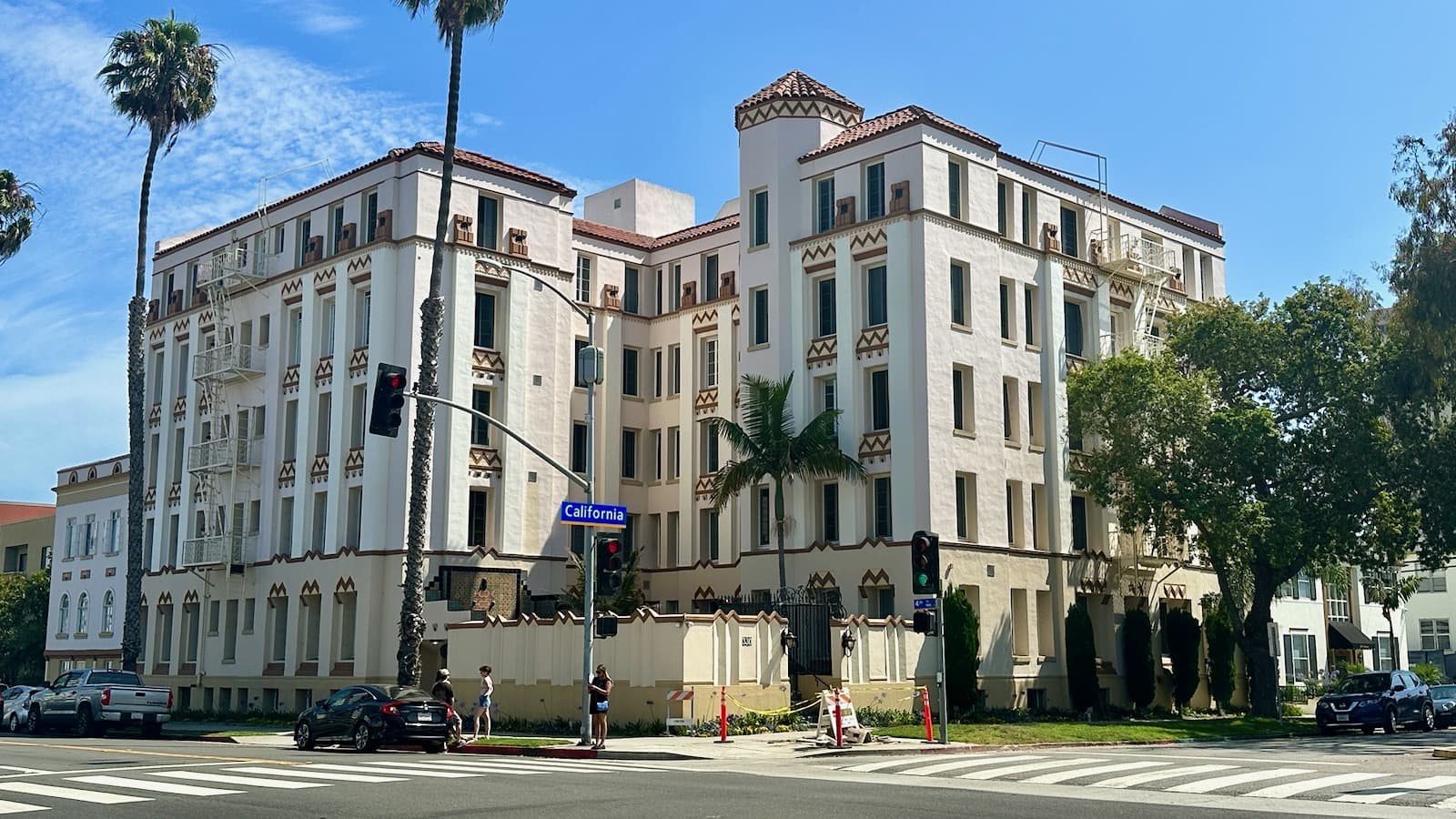
Santa Monica's Charmont Apartments were designed in a unique combination of Spanish colonial & art deco styles by Max Maltzman, one of LA's first Jewish architects. It was lovingly rehabilitated after sustaining damage in the 1994 Northridge earthquake.
Pasadena was the birthplace of the bungalow court, a unique form of multi-family housing that flourished between 1910-1930. I visited all 30 Pasadena courts on the National Register – batch #2 includes craftsman, colonial revival, English cottage-style and a truly transportive example of a Tudor revival bungalow court.
For a Depression-era federal building, the Beverly Hills Post Office is an unusually opulent one, clad in Italianate masonry and terracotta with a lobby awash in marble. After serving Beverly Hillers for over 60 years it was transformed into the beloved Wallis Center for the Performing Arts in 2013.
This distinctive Mayan-inspired home is where architect Lloyd Wright lived and worked for over 50 years. It was built in 1927 during an important transitional phase that found him flourishing as an independent designer after years of collaborating with others – including his dad, Frank Lloyd Wright.
The bungalow court is a style of multi-family housing that places multiple small dwellings around a central courtyard or walkway. This style of housing flourished in LA between 1910 & 1930, especially in Pasadena, but many of them have been demolished. Here are six of the 30 remaining Pasadena courts on the National Register.